Edges, Centres, and the Spaces Between: A New Town Reflection
![Brabazon – Proposed New Town/ Urban Extension in Bristol [Cr: Feilden Clegg Bradley Studios]](https://images.squarespace-cdn.com/content/v1/6478b1598361e228dc4b99b4/0db4d823-be8b-4bf1-b5b7-0e3949baea75/Picture1.jpg)
Figure 1: Brabazon – Proposed New Town/ Urban Extension in Bristol [Cr: Feilden Clegg Bradley Studios]
The Labour government’s housing plan, announced on 22 March 2026, places seven new towns at the centre of its strategy to ease the nationwide housing crisis. Several are already under development. For those of us who grew up in a post‑war new town, this approach may feel anything but radical — and perhaps even a little short‑sighted. Notably, all but one of the proposed new towns will take the form of urban extensions to existing settlements, allowing them to plug into established infrastructure networks.
“From the ground up, we’re planning whole communities with homes, jobs, transport links, and green spaces designed together – so we can give families the security and opportunities they deserve.” — Housing Secretary Steve Reed
One of the many shortcomings of the post‑war new towns was their tendency to impose themselves on the landscape rather than respond to it — environmentally, socially, or culturally. In that sense, this new approach of building onto existing towns and infrastructure is a step in the right direction.
The importance of established infrastructure cannot be overstated. As Harvard economist Nathaniel Hendren noted in a 2015 study, “Access to transportation is the single most important factor in an individual’s ability to escape poverty.” While the Harvard study focused on public transport, the principle extends to all forms of movement: strong pedestrian networks, legible routes, and accessible connections. A well‑connected town is safer, easier to navigate and — arguably — more beautiful.
MS Ken Skates put it succinctly in the Welsh Senedd in 2024: “Public transport should be viewed as the third public service, alongside health and education. It’s incredibly enabling for people; it’s a true levelling‑up mechanism.”
For new towns to succeed, existing routes must be integrated rather than ignored. Public transport — both pedestrian and vehicular — should be embedded within a holistic placemaking strategy that considers movement networks, density, land use, and social and green infrastructure as interdependent parts of a whole.
Learning from the Post‑War New Towns
Centreless-ness
As part of my 2011 thesis, I surveyed residents of Glenrothes — the Scottish new town where I grew up — asking them to identify the town centre. The results were inconclusive. Glenrothes, like many post‑war new towns, simply didn’t have one.
Designed during the car boom of the late 1940s and 50s, these towns often replaced traditional high streets with large shopping malls. When the malls closed in the evenings, they left behind an impenetrable monolith surrounded by car parks. Residents frequently identified one of the mall entrances as the “centre” of town — a telling sign of the absence of a true civic heart.
With the global decline of the traditional high street, new towns must explore alternative strategies to create a sense of place and identity.
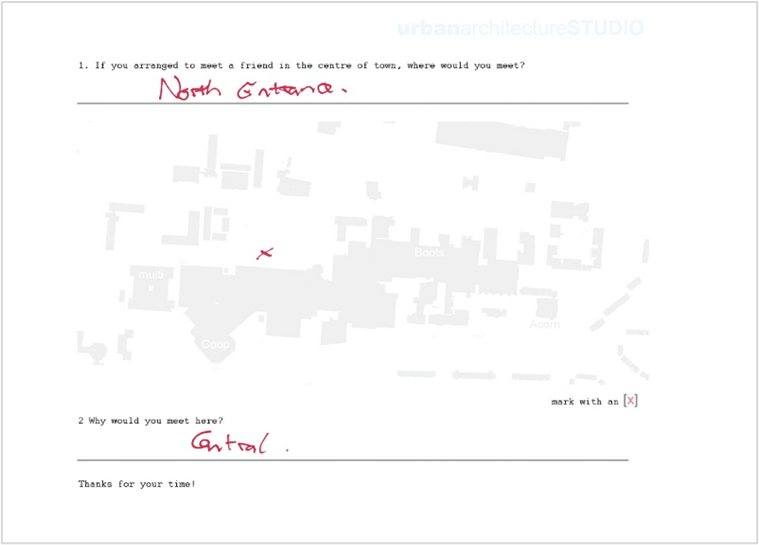
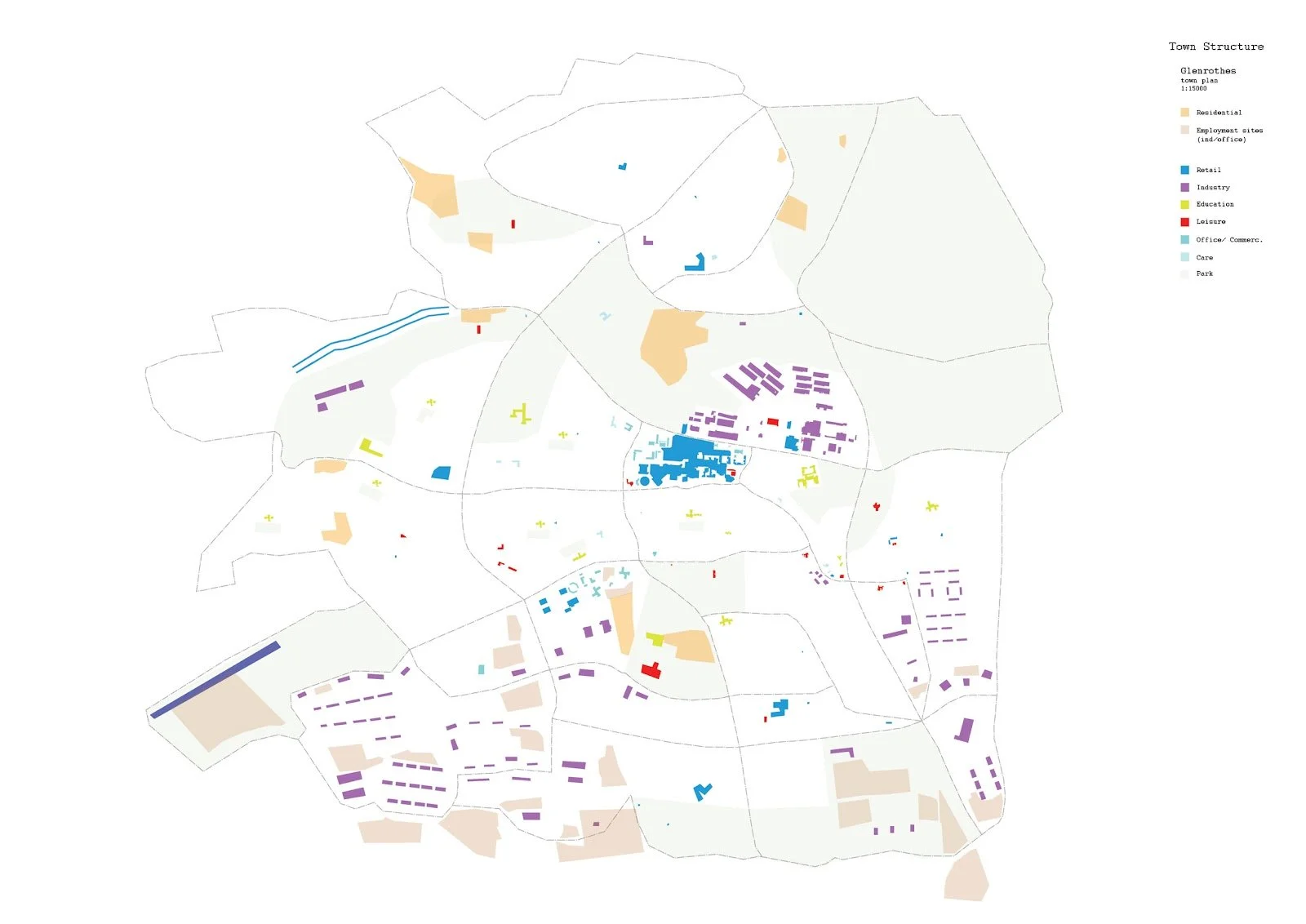
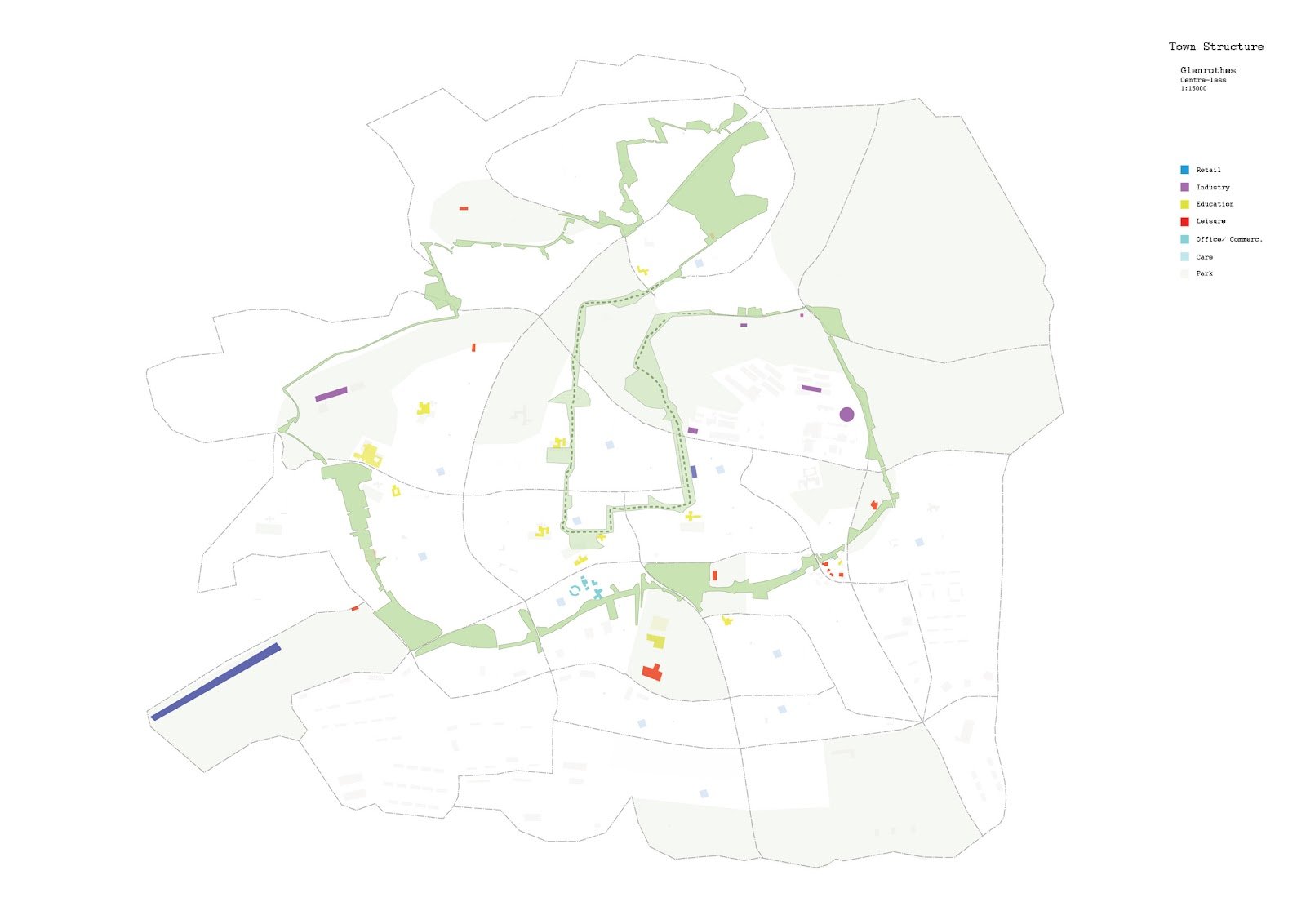
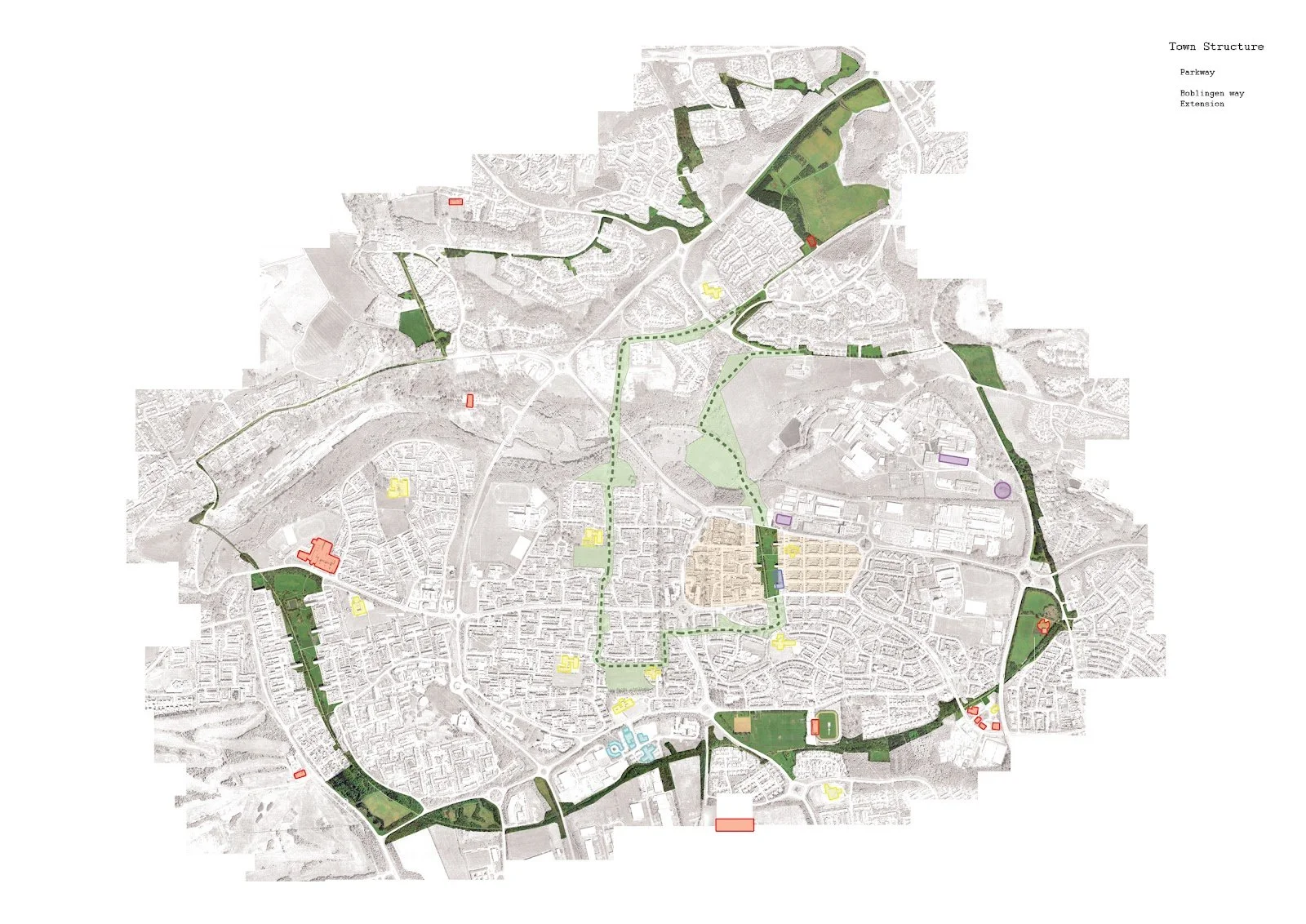
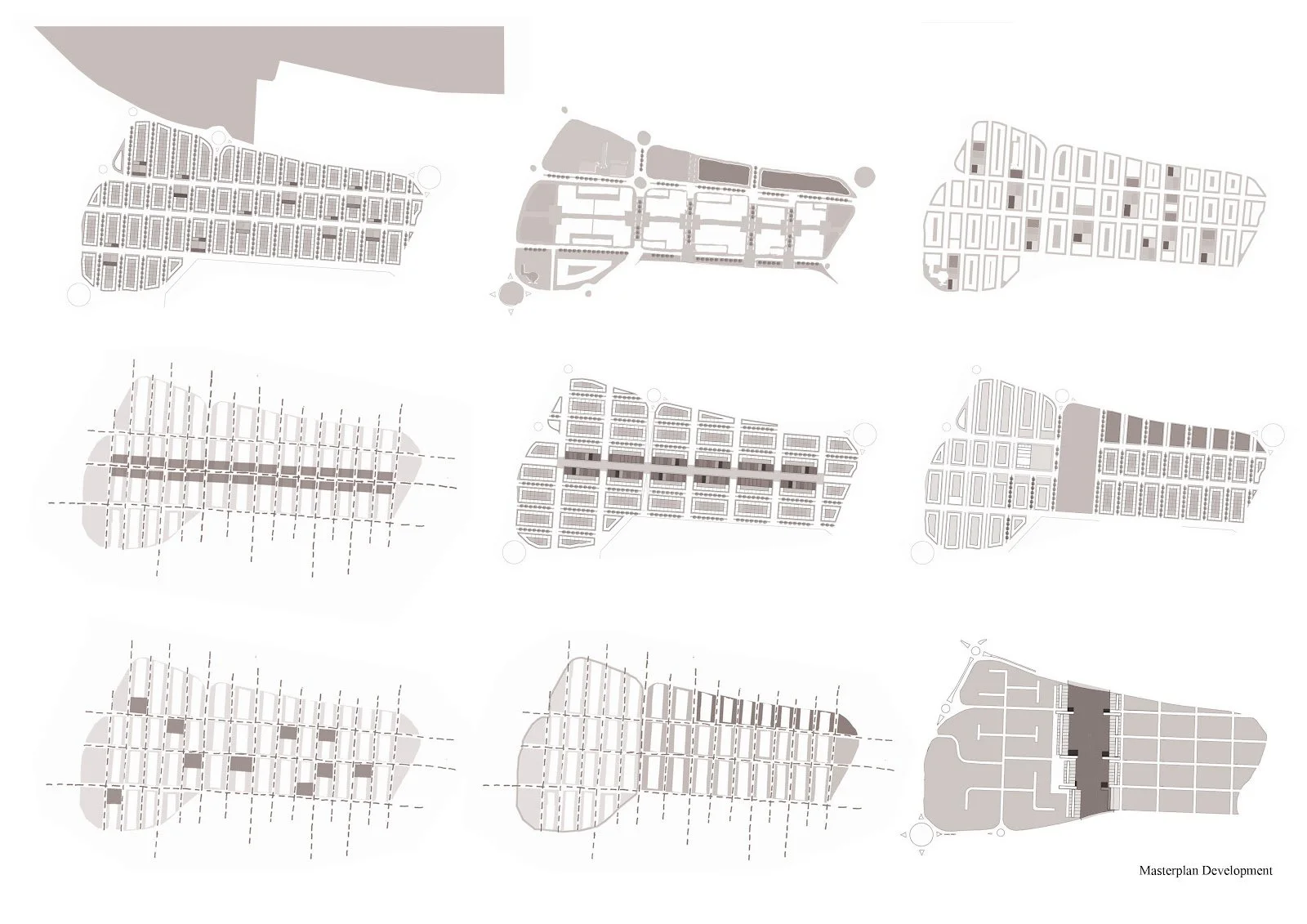
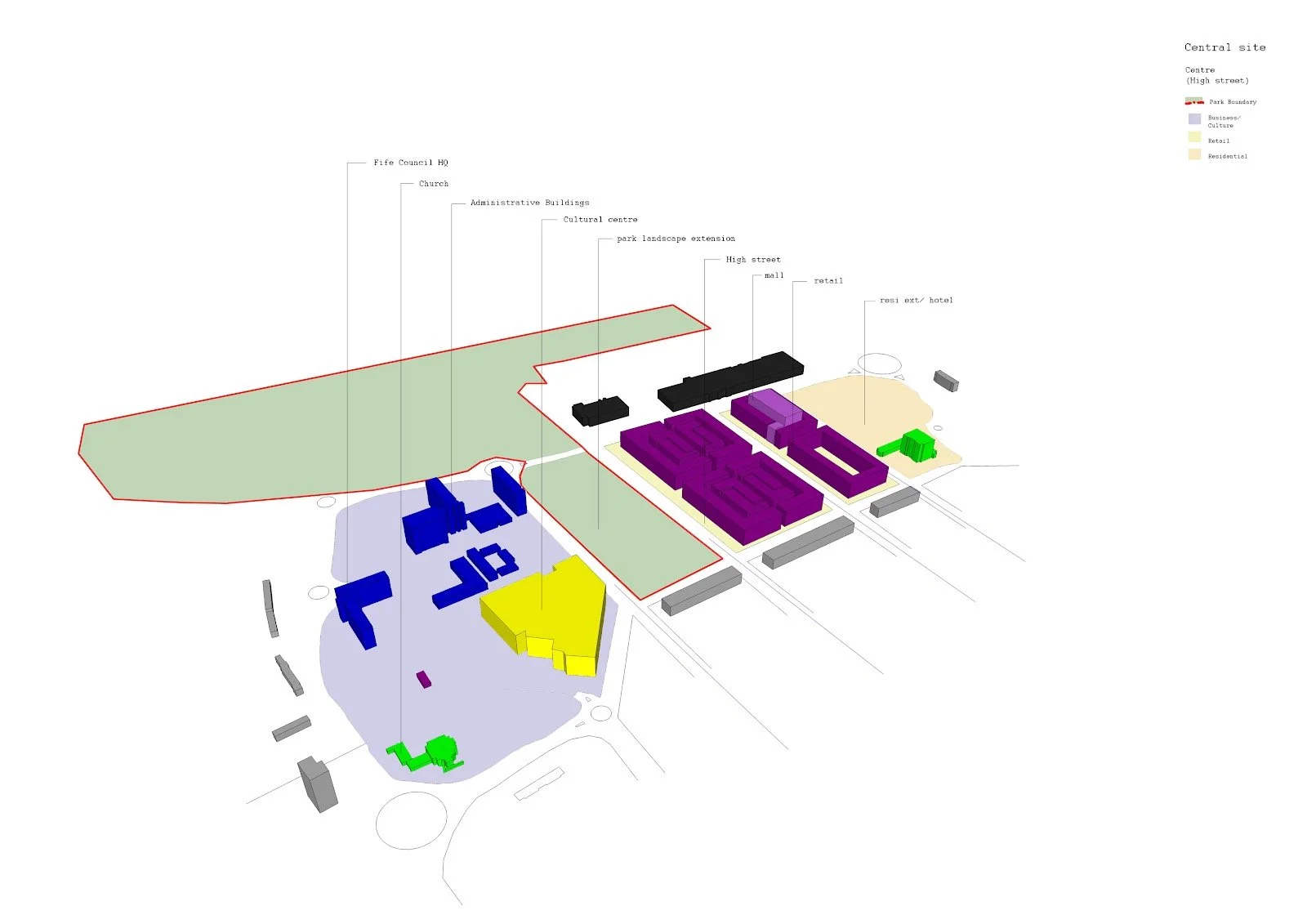
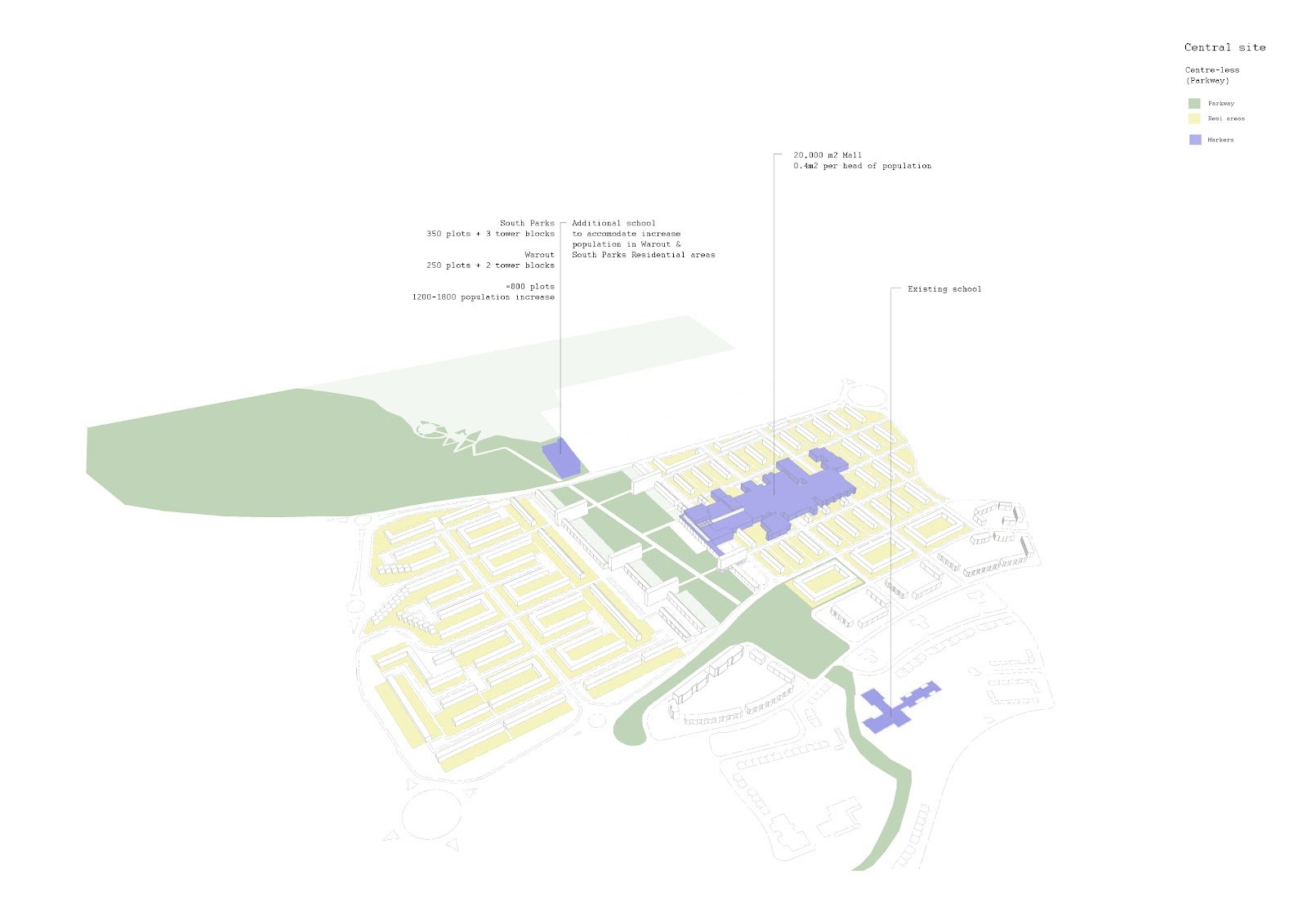
The above are extacts from from my 2011 thesis, exploring my home town of Glenrothes as a Scottish New Town model., and its characteristic lack of an identifiable town centre. (Dundee School of Architecture, Urban Design Group, 2010-2011)

Town Art
One of the great successes of the Scottish new towns was the appointment of a town artist. This created a cohesive artistic direction, with sculptures, installations and interventions woven into parks, pathways and residential areas. It is a strategy worth reviving — art as a civic binder, not an afterthought.
Figure 3: Hippo Sculpture – An example of the town art in Glenrothes [Cr: Fife Art Trail]
Dwelling Design
Post‑war new towns often served as test beds for architectural innovation, resulting in diverse house types designed by contemporary architects. While not always successful, this variety gave neighbourhoods distinct identities. Future new towns should embrace this spirit of experimentation, perhaps through defined design districts.
Neighbourhood Centres
Neighbourhood centres were once a defining feature of Scottish new towns, providing everyday essentials within walking distance. Many have since fallen into disrepair or been demolished, particularly in Glenrothes. Yet the core services they offered — convenience stores, newsagents, small‑scale retail — remain essential. With sustainable design and proper maintenance, neighbourhood centres can once again play a vital role in community life.
Density
Town density is a critical consideration. While sprawling suburbs were intended to foster individual communities, they often resulted in isolation. A medium‑density approach — balancing private homes with shared public and semi‑private spaces — can encourage social interaction and a sense of collective ownership.
Street Hierarchy
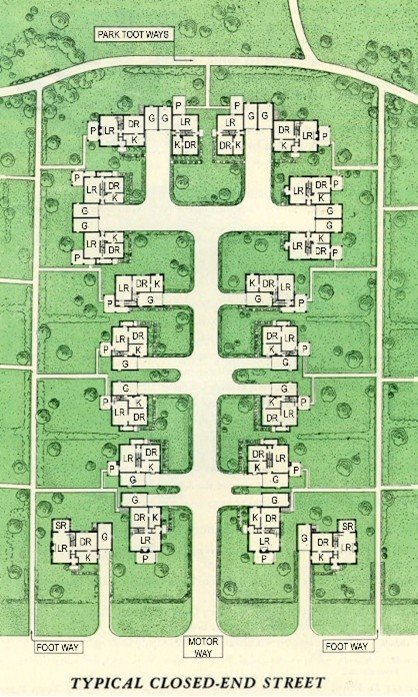
Many British new towns drew inspiration from Ebenezer Howard’s Garden City movement, though most more closely followed the Radburn principles developed in New Jersey in the 1920s by Henry Wright. These principles separated pedestrian and vehicular access, with cars typically routed to the rear of properties and front doors accessed via footpaths.
In practice, rising car ownership meant residents increasingly used the rear door as their main entrance, creating a “back‑to‑front” experience. The intention — to prioritise pedestrians — was admirable, but the execution fell short. Future new towns must consider placemaking from both the pedestrian and vehicular perspective.
Figure 4: Example Radburn principal – street hierarchy sketch by Henry Wright
Conclusion
While the proposed new towns may not align with the traditional definition, they must still learn from the successes and failures of their predecessors. Robust materials, thoughtful placemaking and sustainable attitudes are essential.
A connected infrastructure, shared ownership and long‑term maintenance strategies can help create towns that residents feel proud of — places they want to nurture, invest in, and ultimately grow beyond.
At our studio, we hold to a simple belief: that places grow from the quiet dialogue between people and the space they inhabit. The most successful towns are not imposed; they are coaxed into being, shaped by careful attention to movement, light, topography, and the small rituals of daily life. If the next generation of new towns is to flourish, they must be conceived with this same sense of patience and stewardship — woven into their surroundings, generous in their public spaces, and resilient in their making. Our role as architects is to help nurture this unfolding: to craft environments that feel rooted, humane and full of possibility, where communities can not only live, but belong, and ultimately carry their stories forward beyond the town themselves.